
What is EB
Epidermolysis Bullosa (E.B.)
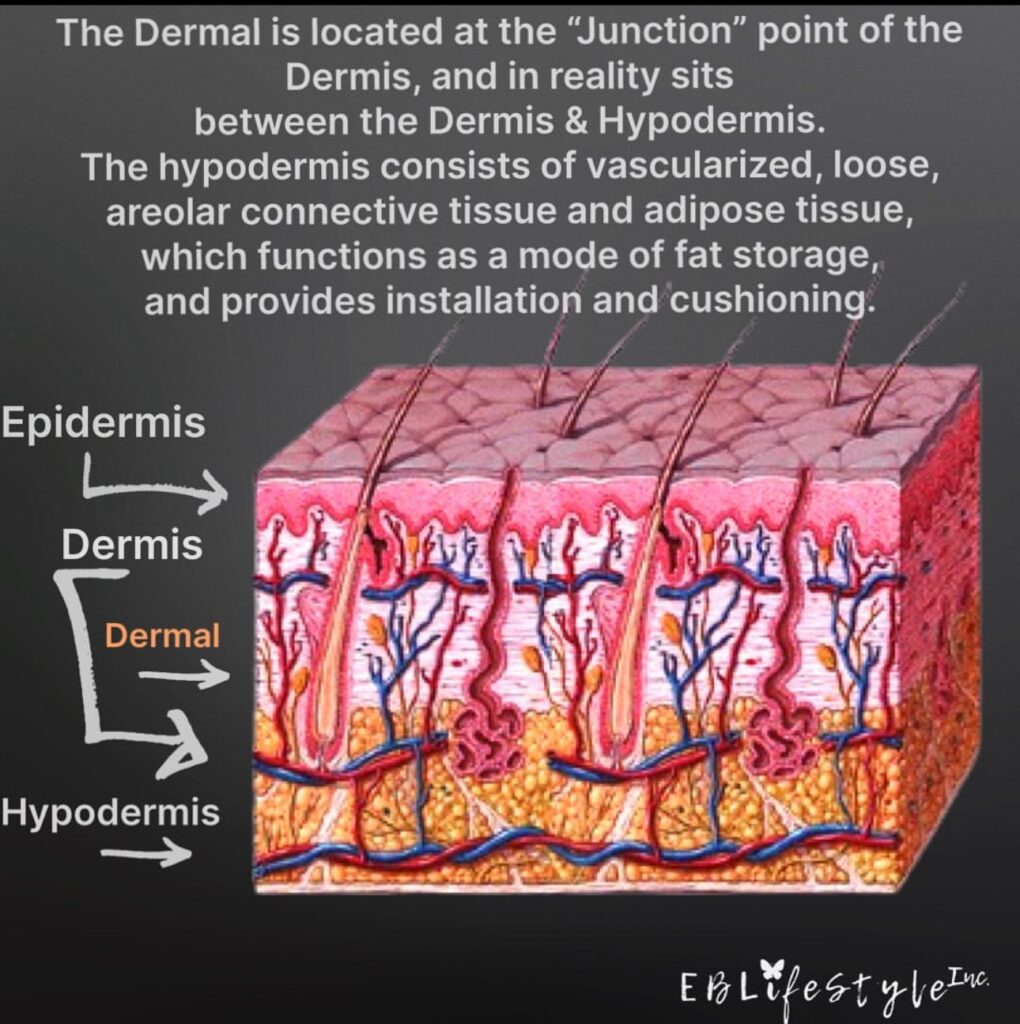
Epidermolysis Bullosa (E.B.) is a genetic skin condition. That is caused by the body not producing enough or the body having a mutation of collagen proteins. Collagen proteins are the glue that anchor your skin layers together between the Epidermis and dermis of the skin. The fact that people with EB either have a mutation or their bodies don’t make an efficient amount of these proteins causes the Skin to tear and blister, extremely easily, also causing painful wounds throughout the body.
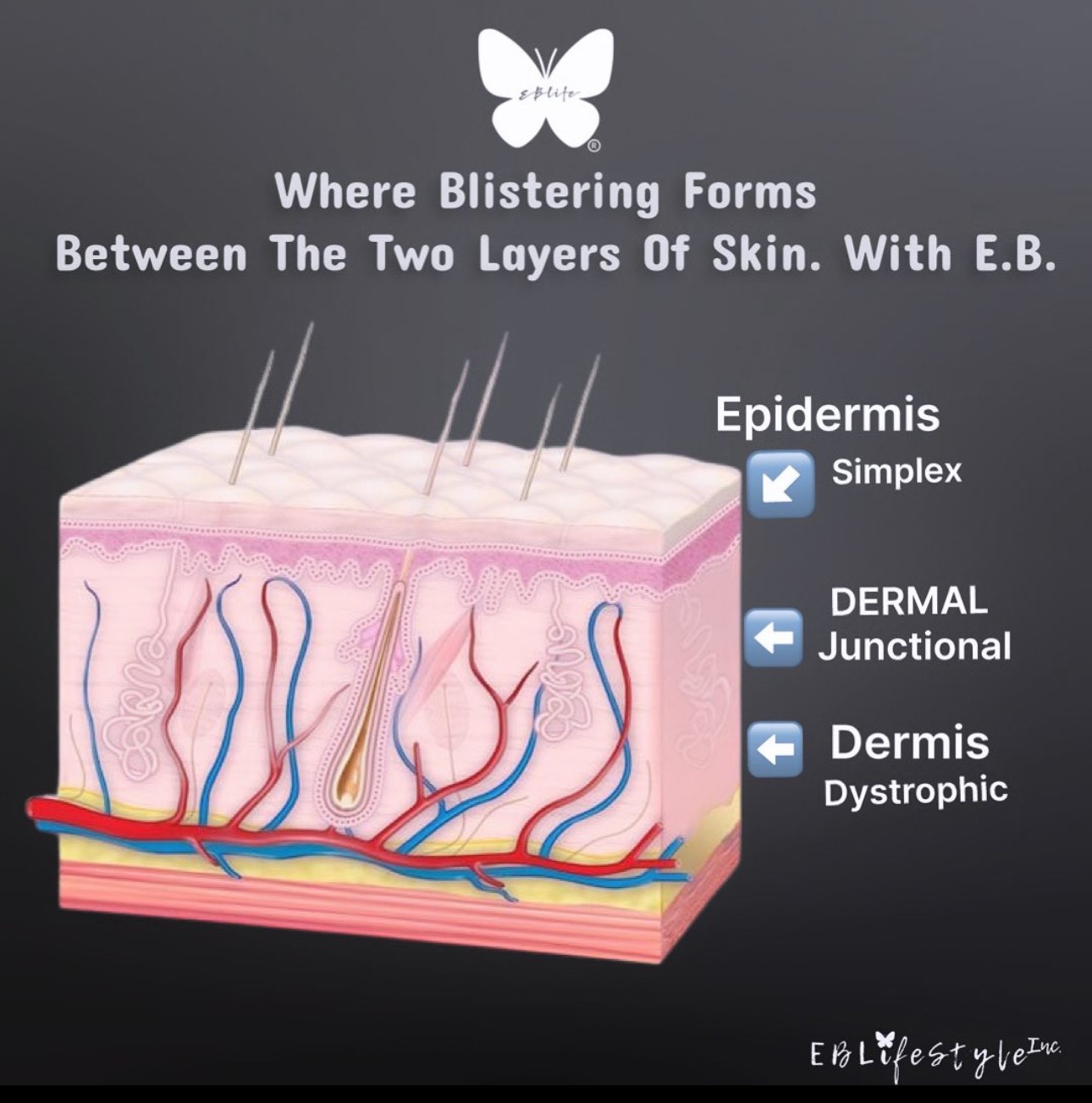
There are four main types of E.B. Simplex / Dystrophic / Junctional / & Kendler.
Simplex
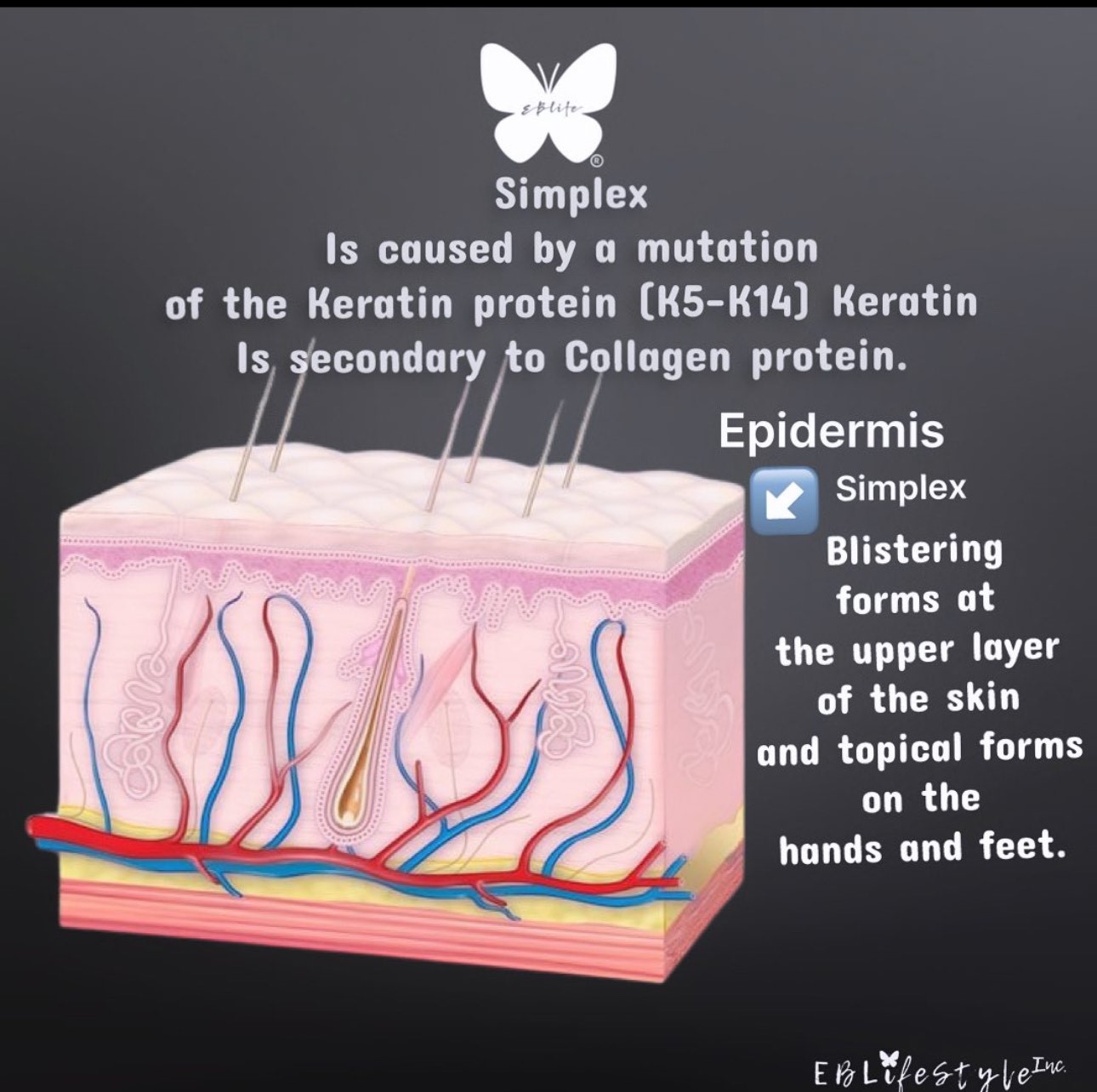
Simplex: is caused by a mutation of the keratin proteins (K5 & K14). Keratin is the secondary protein of collagen, therefore individuals that have the simplex sub type Of E.B. Are not as severe as other forms of the skin condition.
Dystrophic
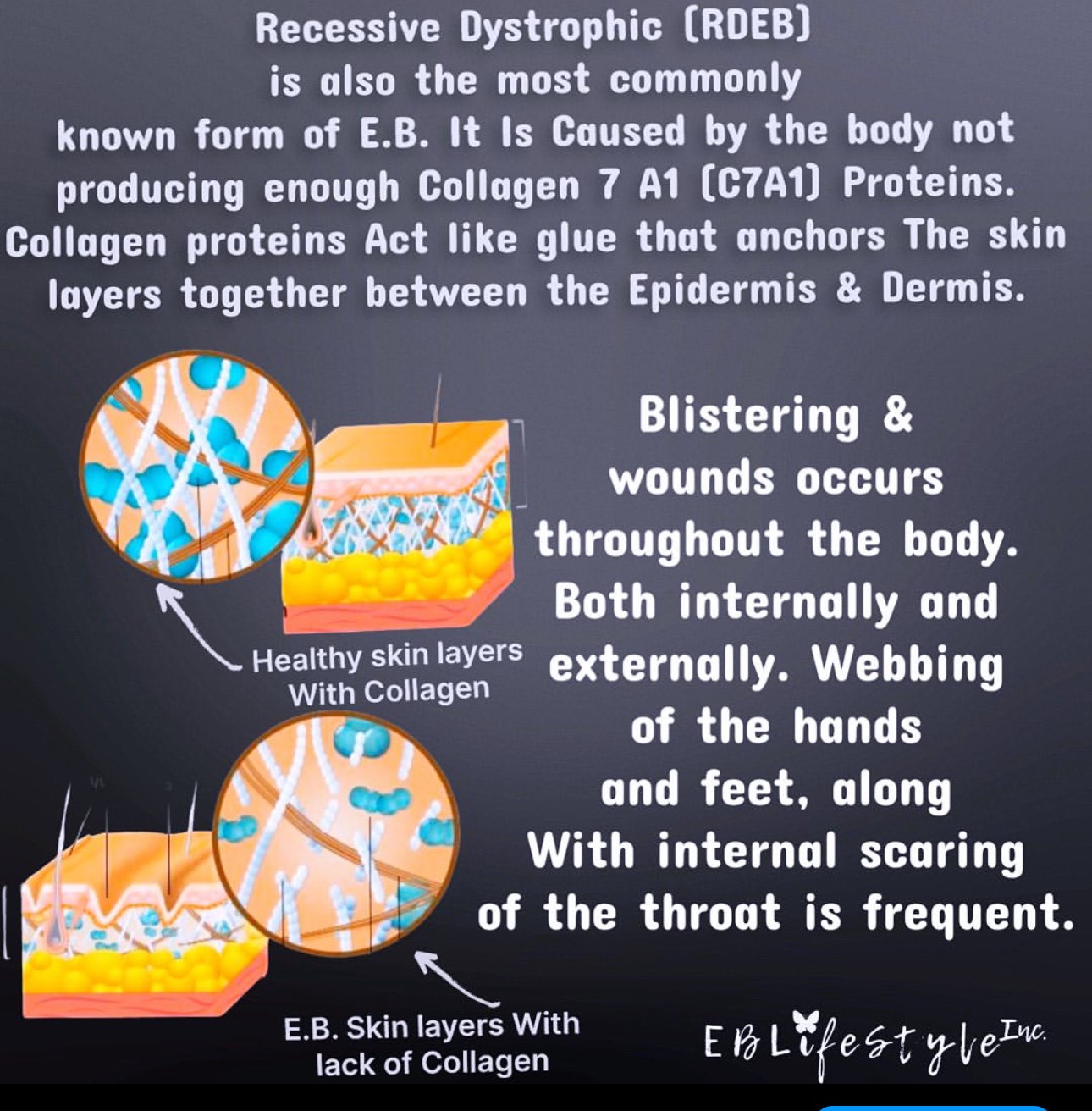
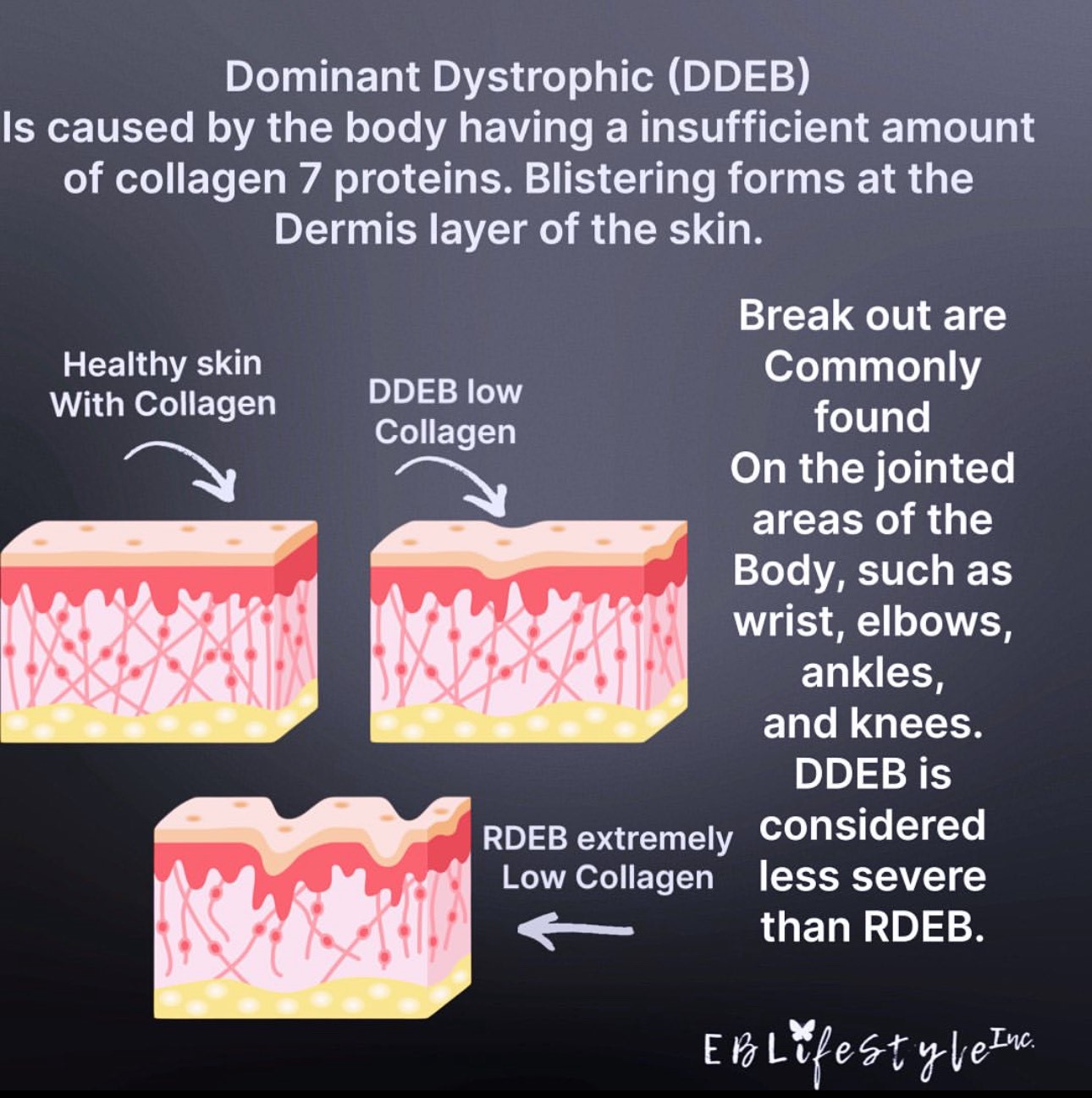
Dystrophic: is caused by the body not being able to produce enough of the collagen 7 A1 (C7A1) Protein. It is the most common form of E.B. And it has two different types. Recessive Dystrophic (RDEB) and Dominant Dystrophic (DDEB).
Recessive Dystrophic
Recessive Dystrophic: Blistering occurs throughout the body, both internally and externally. Webbing of the hand and feet, including internal scarring of the throat, is also common with this subtype.
Dominant Dystrophic
Dominant Dystrophic: Blistering can occur at the dermis layer of the skin, wound breakouts are typically on jointed areas, such as the wrist, elbows knees and ankles. Blistering and Wound also occur on the feet as well. Because it is the dominant subtype It only takes one parent to pass the genetic mutation to a child. Meaning, most cases of Dominant Dystrophic the person can trace it to a direct family lineage. For example brother or sister, or an Aunt or Uncle.
Junctional
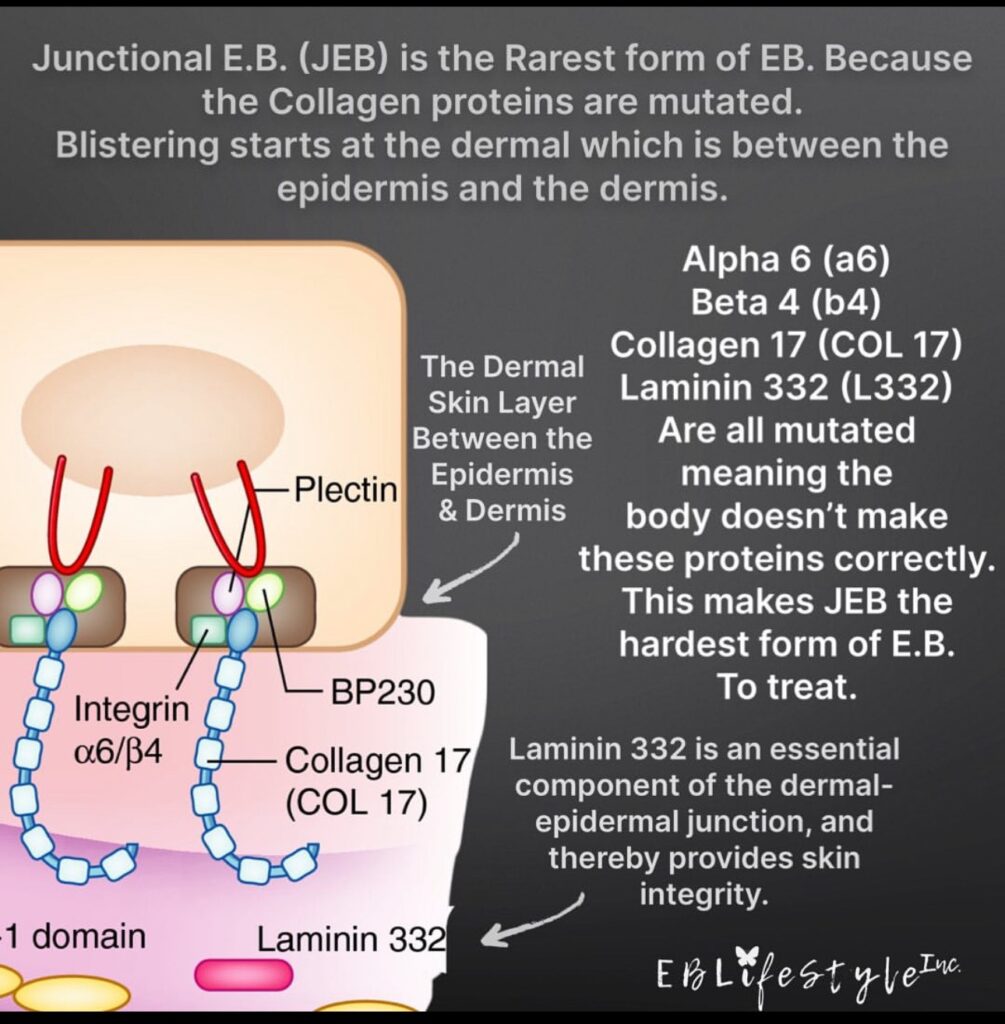
Junctional: Is The rarest form of E.B. It is caused by a mutation of multiple collagen Proteins, including collagen 17 (C17) Alpha 6 (a6) Beta 4 (b4) and in some cases, but not all the Laminin 332 (L332) Blistering and wounds can occur throughout the body. Although there may be less eternal issues, Junctional is considered to be the hardest to treat because the body is dealing with multiple mutations on a cellular level.
Kindler EB
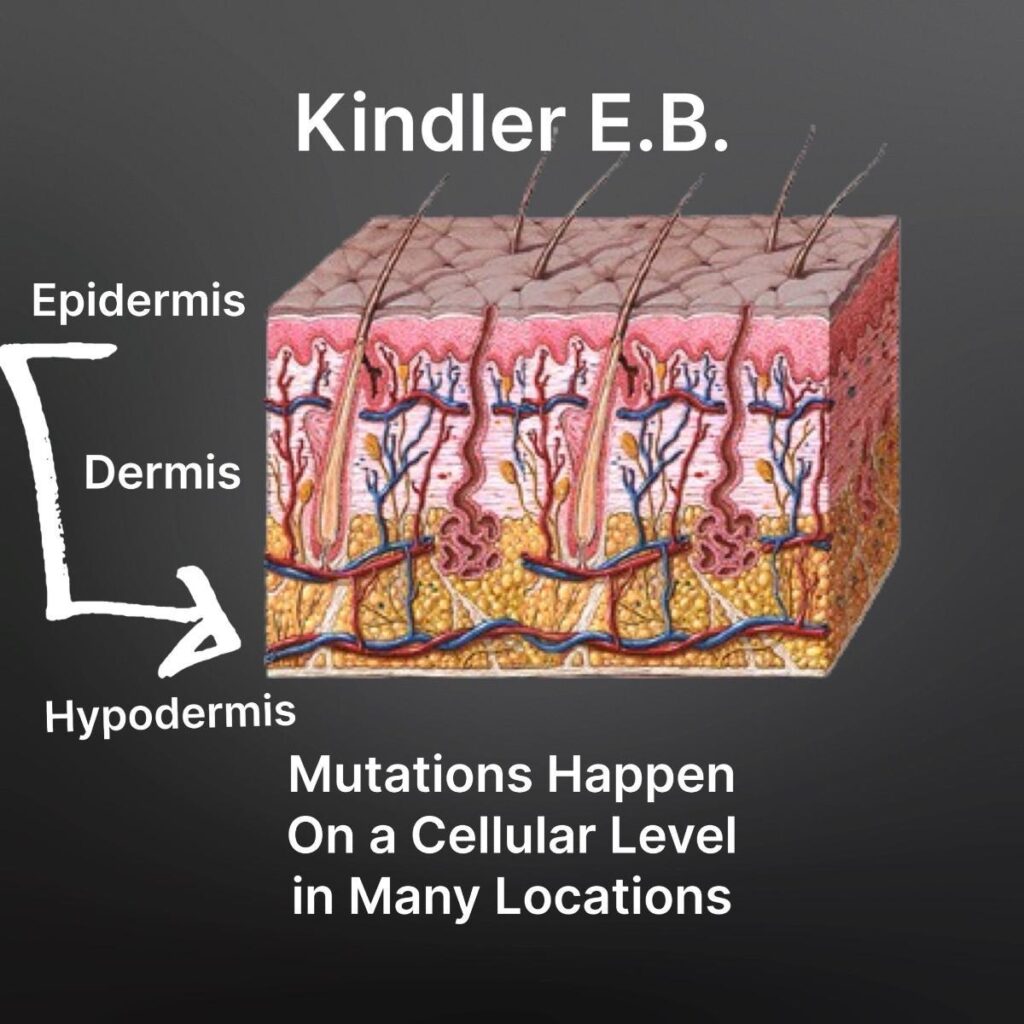
Kindler EB is a rare type of EB with about 250 affected individuals reported worldwide since the first description in 1954. It is more common in isolated or consanguineous populations.
OUR MISSION
Our mission is to help the E.B. Community with lightweight, portable mobility aids. Insurance companies, consider lightweight, portable mobility a luxury item, and will not cover them. They will cover a 250 to 300 pound Motorized wheelchair. Giving the parents or caregivers that Added Financial burden of having to purchase an accessible Mobility vehicle.
Our heaviest wheelchair only weighs 62 pounds By us, donating, lightweight mobility aids A parent or caregiver can easily fold up one of our wheelchair or scooters into the back of Any standard vehicle with ease. Give me the person living with EB mobility and gaining independence and freedom.
A child living with EB can go to school, without fear of being accidentally bumped into or stepped on in the hallways. A team can go to college and get around on campus with ease. Or a young adult can get a job, and that have to worry about being a burden on a loved one.
When we donate our mobility devices, we see an instant change in the individual we give it to. As if we have unlocked a door that has been closed off to them for so long the mental aspect The donation is just as crucial as the Physical.